MEVIA OS is a Decentralized Operating System
The Problem
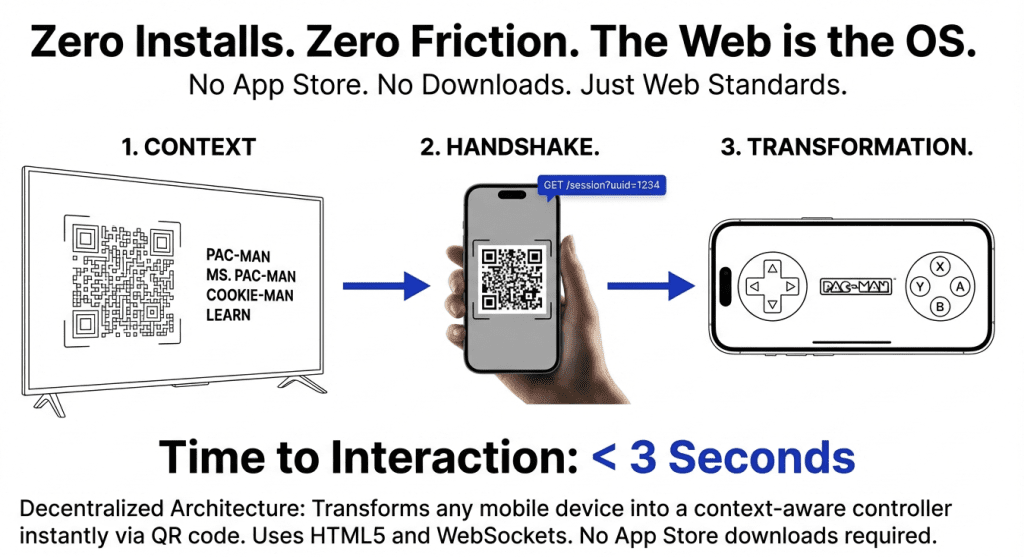
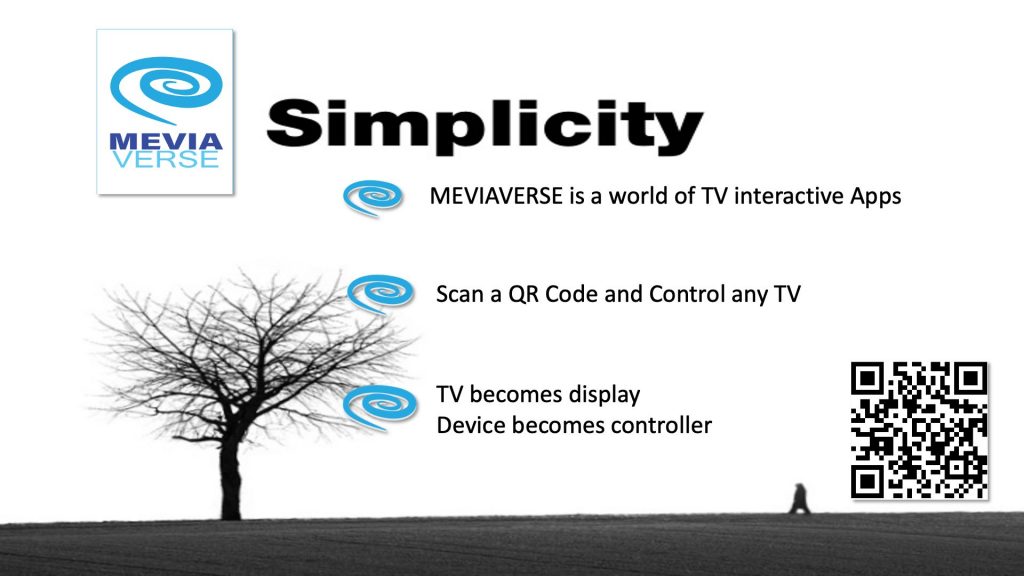
Too many Apps, Apps for this, for that, IOT is making apps clutter or phones. What if their Web is an OS and the device turns into a controller of the device, Smart TV, or anything by simply scanning or pointing your phone to the device. That's MEVIA OS, our patented decentralized operating system.
Decentralized Operating System Platform
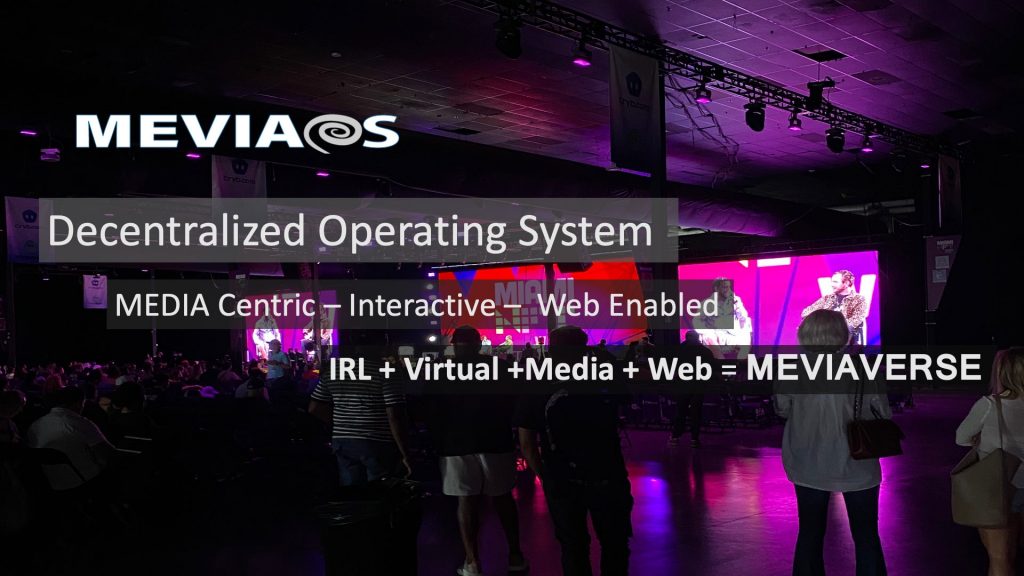
MEVIAOS enables a universe of apps that we call the MEVIAVERSE.
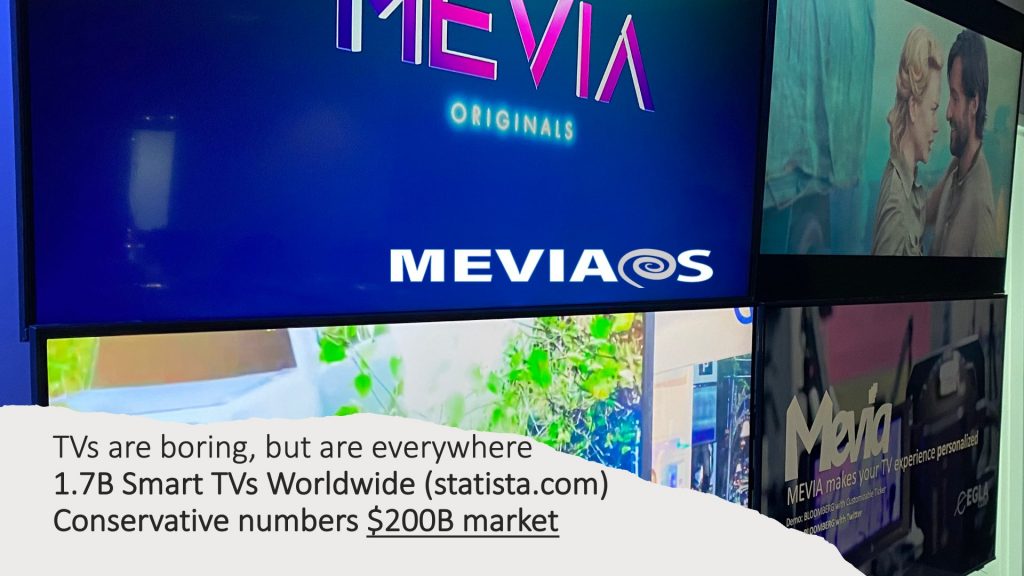
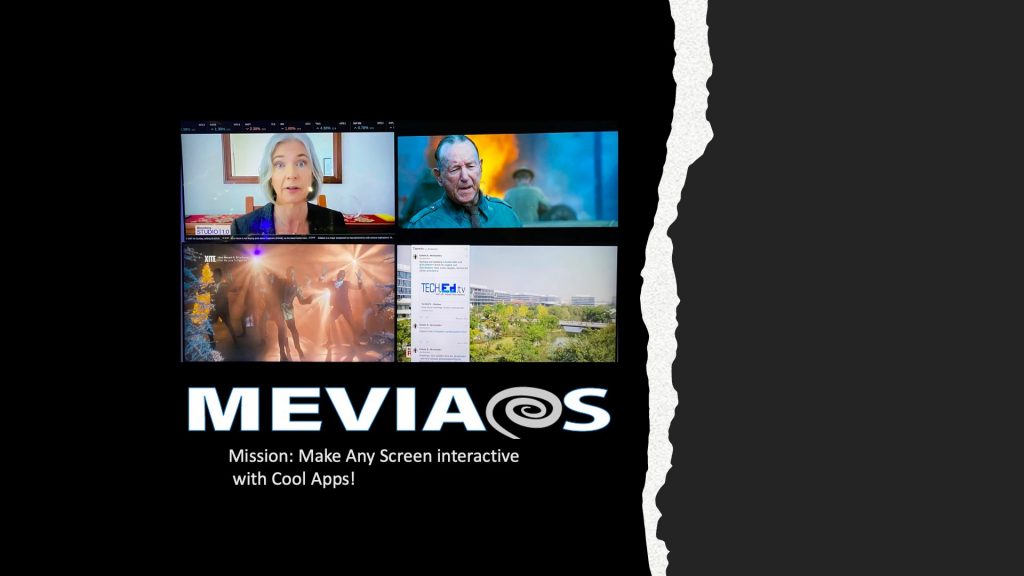
We at EGLA already have MEVIA a platform designed for streaming and TV broadcasting. This platform was created the past 10 years and evolved with HTML5 and web apps.
What is then MEVIA OS, is an Operating System, that uses the web as its fabric to communicate devices with TV screens.
"The Web is the OS"
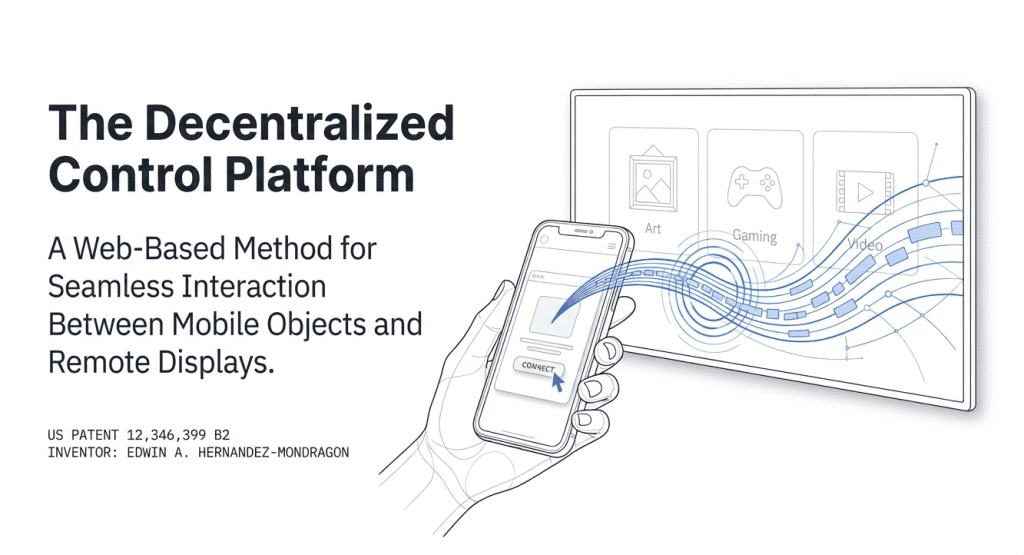
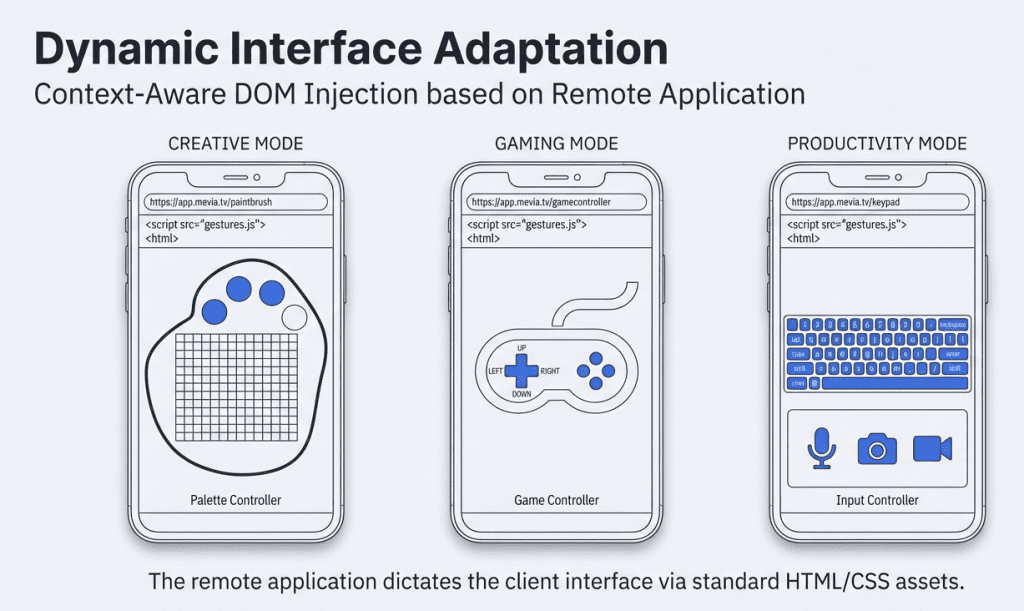
MEVIAOS connects any phone or mobile device to a TV, IOT device, or and vice verse. Simply, "Transform" your iPhone into a game controller, or a painting palette, or why not? use your own iPhone to and connect a session where your phone is the camera and the TV is your display. We have the 1st issued patent: US Patent 123456399 and our MEVIA OS Pitch for a new venture to spinoff.
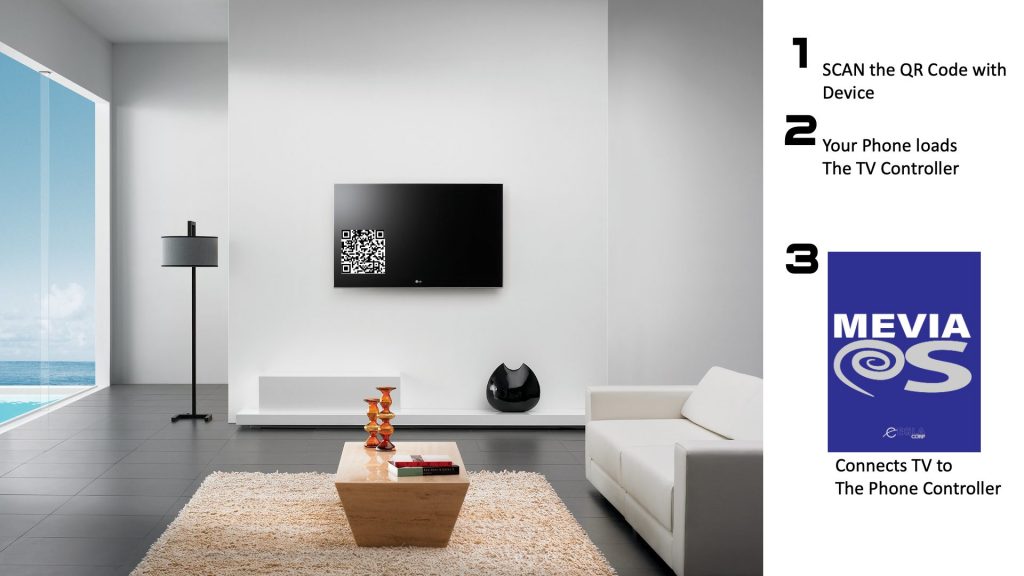
Dr. Edwin Hernandez has developed a new technology, under Mevia OS, that can be described as a “Universal Web Control: Revolutionizing Distributed Display Environments.” This blog post draws directly from the provided sources regarding the patent-pending technology for seamless mobile-to-display interaction. Including use of gestures, machine learning, computer vision to interact with displays. The main goal is “Zero Friction,” no applications installed, simply scan a TV or a QR Code associated with the TV and start interacting with it.
Beyond the Remote: How it Works
The core of this innovation is the Device Connect Platform, which serves as a “glue” between web applications and mobile controllers.
HOW IT WORKS?
NFT Museum Demo
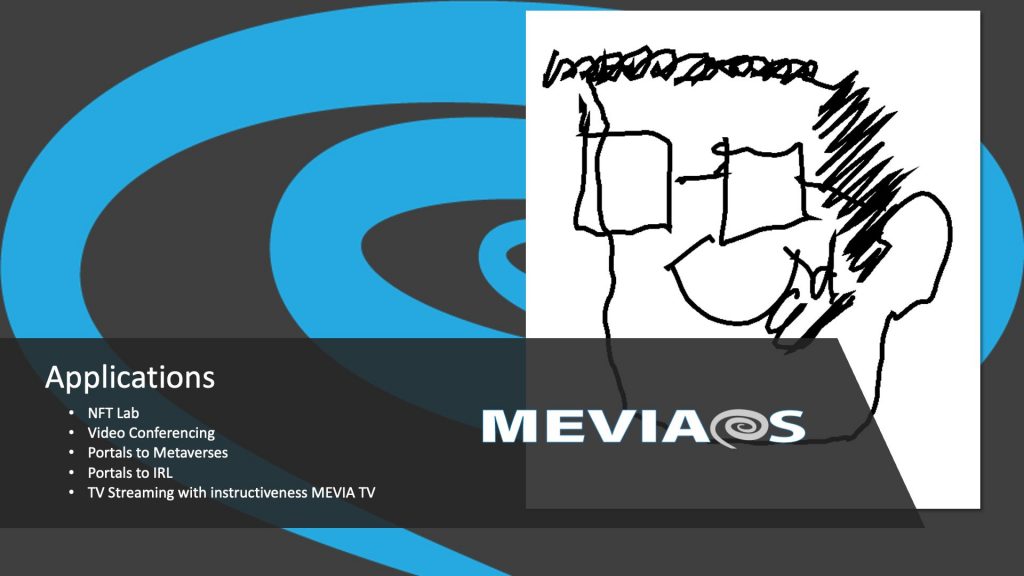
Early demonstration using drawing NFTs
During the MIAMI NFT Event in April 2021, EGLA CORP as a sponsor showed a booth with a very early stage of the NFT LAB App. This platform has evolved and updated to a series of use cases that make MEVIAOS the alternative OS for the web.
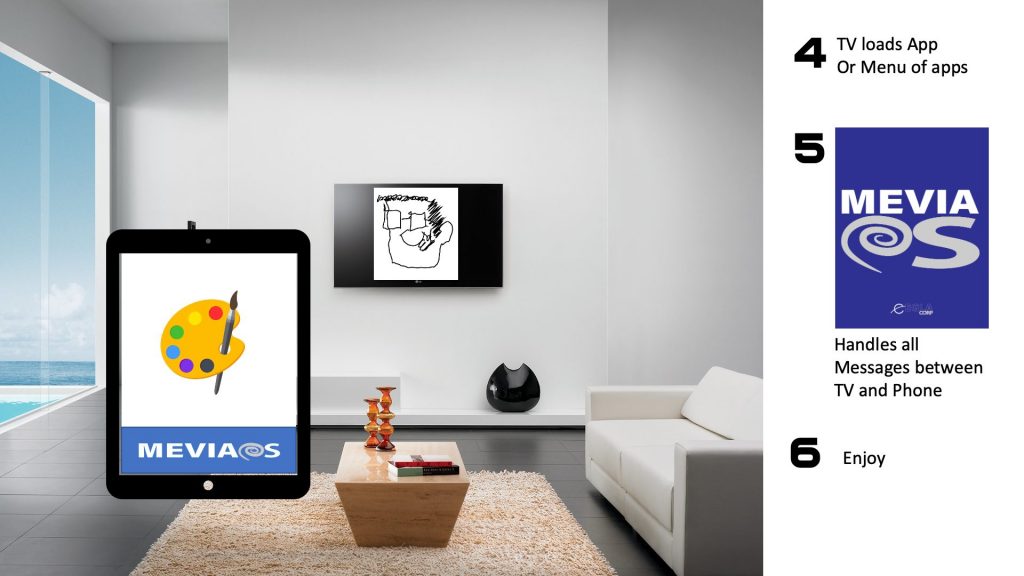
MEVIAOS, a novel approach
Hera, at EGLA we have been particularly interested in Operating Systems. We have personally worked on Linux and Windows systems since the 1990's.
MEVIA OS answers the question if there is a way to create an operating system that is fully decentralized that uses all the machines around us, servers, etc as the "hardware," meaning storage, caching, memory, and use our phones to become, the controller. A fully decentralized operating systems.
This technology has an issued patent that complements the MEVIA as a platform has already 5 issued US Patents and 1 European patent.
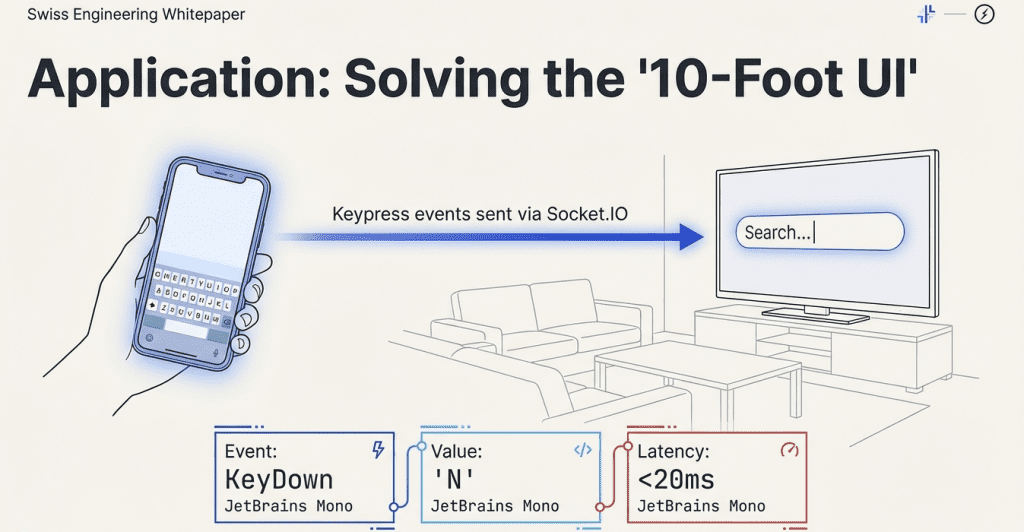
The original has consisted on downloading the operating system and installing it into the firmware and using the memory and i/o devices as we have done thus far.
What we propose with MEVIAOS is different, basically what we propose is the use of the web as the fabric, and decentralized the generation of controllers that reside in your phone, iPAD, or any other portable device.
In the following proposal, javascript and server-based protocols are used to handle devices and control the way the distributed operating system work. In summary, the web and MEVIAOS display the controller, depending on the app that can be displayed in a a screen, when all the other functions reside in the cloud, or a blockchain, or in general in any remote system that has multiple processors, storage, memory, GPU, and never needs to be upgraded.
The Operating System (MEVIAOS) is then residing in the "Ether" and applications are built by loading MEVIA OS as part of their application framework and defining what kind of controllers are supported by the application.