Historic Triple Victory at the PTAB: Dr. Hernandez-Mondragon’s Cloud-Based Multimedia Delivery Patents Withstand Inter Partes Review (Stingray Music IPRs)
June 10, 2026
Filing at the ITC, Part 2: What Actually Goes Into a Section 337 Complaint
July 1, 2026
This is Post 1 of a three-part series on litigating intellectual property and trade secret disputes at the U.S. International Trade Commission (ITC). Post 1 covers why the ITC has become a favored venue. Post 2 walks through the mechanics of actually filing a complaint. Post 3 looks specifically at how streaming, connected-TV, and audio technology owners have used Section 337 — and what that means for a domestic industry built on licensing, and finally, on Trade Secrets and the ITC
A regulatory fence around the U.S. border
Section 337 of the Tariff Act of 1930 gives the ITC the power to block the importation of any product that infringes a U.S. patent, trademark, or copyright, or that was made using a misappropriated trade secret — even when the underlying conduct happened entirely overseas. The statute reaches not just the statutory IP rights but unfair methods of competition and unfair acts more broadly, including trade secret misappropriation and other non-IP claims, and the Commission can investigate a claim even where the misappropriation occurred entirely outside the United States.
That reach is not theoretical. Active trade secret investigations at the ITC rose from one to nine between 2017 and 2021 — an 800 percent increase — after averaging about two per year from 2013 to 2017. Patent-based Section 337 cases have grown even faster: the Commission’s caseload climbed from 27 active investigations in 2000 to 140 in FY2022. Dr. Hernandez have been involved in several cases as an expert witness, including:
- BNR (Mobile / Wireless Patents) v. Several Defendants (NOKIA, BLU, Samsung, TCL) – International Trade Commission Case No. 337-TA-3568
- Certain Electronic Devices and Semiconductor Devices Having Wireless Communication Capabilities and Components Thereof; Inv. No. 337-TA-1367 (Violation)
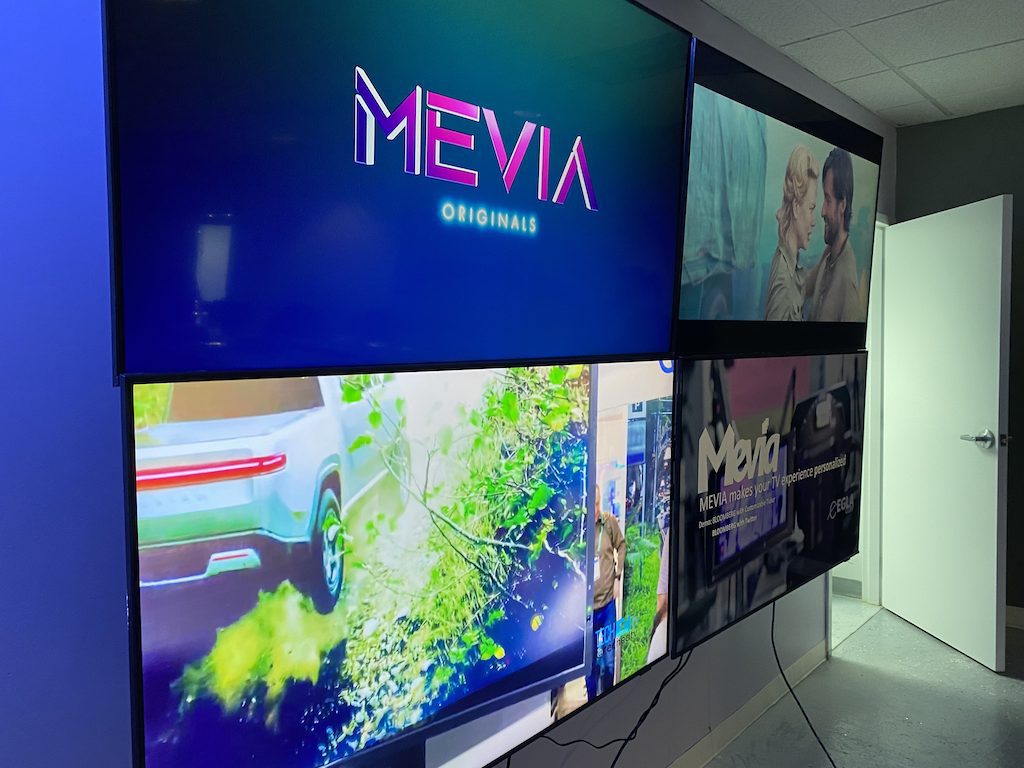
Some technologies that are going to be used are examples in these articles are, video and audio streaming that has been squarely inside that trend. Recent and pending investigations have targeted smart TVs, streaming players, set-top boxes, and wireless speakers built by some of the largest consumer electronics importers in the world — a pattern we’ll unpack in Post 3.
Four traits that make the ITC different from district court
1. Worldwide jurisdiction
The ITC does not care where the misappropriation or infringing design work happened. If a product built anywhere in the world is imported into the U.S., the Commission has jurisdiction. More than 80 percent of Section 337 trade secret cases since 2011 have involved conduct in the Asia-Pacific region, a reach that often catches respondents off guard when they assume that trade secrets developed and misappropriated abroad fall outside the ITC’s authority. For a complainant whose manufacturing rivals or licensees are based in Asia — a common fact pattern in consumer streaming hardware — this removes a jurisdictional defense that would otherwise be available in federal court.
2. A mandatory, and often decisive, injunction
District courts apply the four-factor eBay test before granting an injunction, and post-eBay injunctions in patent cases are the exception rather than the rule. The ITC works differently. If the Commission finds a Section 337 violation, it issues an exclusion order barring the infringing products unless the public interest weighs against exclusion — an outcome the Commission has found only rarely. The length of that exclusion is tied to how long it would have taken a respondent to develop the same technology independently, and exclusionary periods have run anywhere from one month for a simple stock pot up to 26 years for balanced armature devices used in earbuds and hearing aids. A multi-year exclusion order threat changes the settlement calculus considerably — it is often enough to push a respondent toward better settlement terms than it might have accepted in district court.
The clearest illustration remains a battery case rather than a streaming case, but the number speaks for itself: SK Innovation agreed to pay LG Energy Solution US$1.8 billion in cash and royalties in 2021 after the ITC found a Section 337 violation for trade secret misappropriation. No money changes hands directly at the Commission — but the threat of exclusion got the parties to a number a district court jury verdict rarely reaches.
3. Speed
Section 337 investigations from 2018 to 2022 averaged 17.6 months from institution to final determination, including roughly a six-month COVID-related delay, with trade secret cases running about three months longer than that average. A comparable trade secret case in U.S. district court took an average of 27.8 months to reach verdict over the same period. More recent ITC data continues to describe an even more compressed timeline for straightforward matters, with hearings typically concluding seven to nine months after institution and a final decision, on average, in the neighborhood of 17 to 18 months. The compressed schedule cuts both ways: the pace of ITC litigation tends to put respondents on the defensive and can make it harder for the parties to focus on settlement instead of just keeping up with deadlines.
4. Preclusive effect on trade secret findings
District courts are generally bound by ITC trade secret misappropriation findings, so the losing party at the Commission cannot relitigate the same issues later in district court — meaning a complainant can, in theory, win an exclusion order at the ITC and then use that finding to pursue money damages in federal court. That two-track strategy is one reason trade secret owners increasingly treat the ITC and a parallel district court case as complementary, not competing, venues. The important caveat: the ITC’s patent infringement rulings do not carry that same preclusive weight in district court.
The one requirement that separates the ITC from a straightforward patent case: injury
None of this is a free pass. Unlike patent, copyright, trademark, mask work, or vessel hull design claims — which carry no separate injury requirement — a Section 337 case built on trade secret misappropriation or other “unfair acts” must satisfy the domestic industry requirement by showing threatened or actual injury to a U.S. industry.
For filing at the ITC, a complainant asserting misappropriation must define the relevant domestic industry and show that the misappropriation has caused, or threatens to cause, substantial injury to it. If that showing fails, the case ends there — the Commission will not even reach the merits of the misappropriation claim. In one recent case, the Commission ordered the presiding judge to rule on the injury question within 100 days of institution, before the parties briefed anything else. Getting the injury and domestic industry theory right before filing — not after — is one of the most consequential strategic decisions a prospective complainant makes, and it’s the subject we’ll return to in Post 3 when we look at how streaming and audio technology complainants have satisfied it.
Coming up
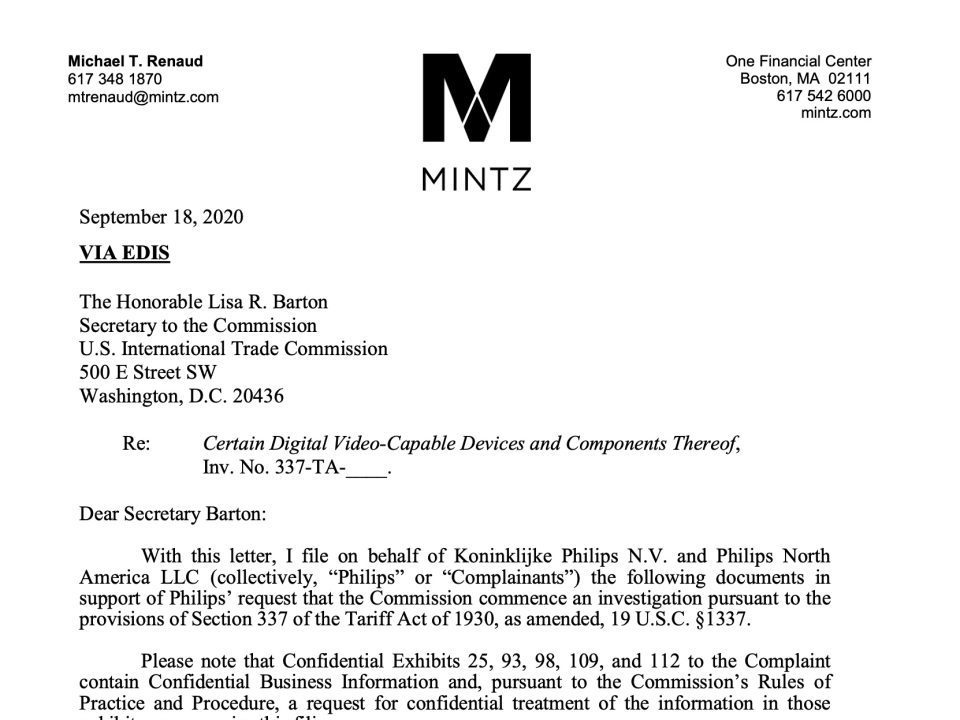
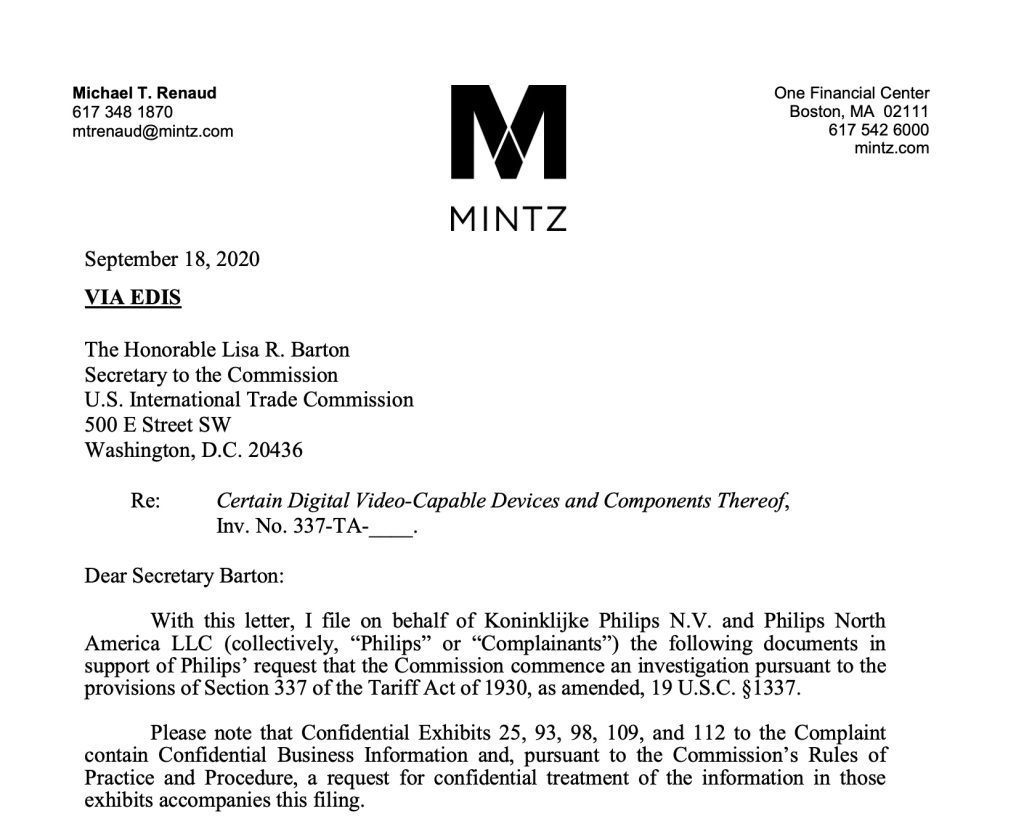
Post 2 in this series walks through what actually goes into a Section 337 complaint: the cover letter, confidentiality requests, EDIS filing mechanics, copy requirements, and the specific technical exhibits — prosecution histories, claim charts, license agreements — the Commission’s rules require before an investigation can even be instituted.
This post is for general informational purposes and does not constitute legal advice. Section 337 practice is governed by 19 U.S.C. § 1337, 19 C.F.R. Parts 201 and 210, and the Ground Rules of the assigned Administrative Law Judge in each investigation.