Filing at the ITC, Part 3: Lessons from Streaming and Connected-TV Cases
July 1, 2026
Patent Damages After the PTAB Speaks: Why Your Damages Report Is Now Obsolete — and How to Rebuild It
July 11, 2026This is a follow-up to a three-part series on litigating IP and trade secret disputes at the U.S. International Trade Commission. Pt 1 covered why the ITC has become an attractive forum, Post 2 covered the mechanics of filing, and Post 3 applied all of it to streaming and connected-device cases. This post goes deeper on trade secret claims specifically — the different legal framework they follow, the open statute-of-limitations question at the Commission, the several distinct ways “concealment” shows up in ITC practice, what the Federal Circuit’s 2026 ruling in a major DTSA case means for anyone building a misappropriation record, and where to find the Commission’s own complaint forms and filing guides.
Trade secrets follow a different track than everything else at the ITC
Most Section 337 investigations allege patent infringement, and the statute treats patent, copyright, trademark, mask work, and vessel hull design claims essentially the same way: prove infringement, and injury to the domestic industry is presumed. Trade secret misappropriation is not decided under that framework. A trade secret-based investigation instead requires the complainant to prove four things: an imported product exists; the importation or sale of that product arises from an unfair act, such as misappropriation; a U.S. industry exists that would be destroyed, substantially injured, or prevented from being established by that unfair act; and a specific injury, or threat of injury, to that domestic industry. Patent claims made up almost 90 percent of the ITC’s active investigations in 2023, while investigations based solely on trade secret claims accounted for less than 2 percent of the active docket that year — a gap several practitioners have flagged as a missed opportunity for companies whose secrets were misappropriated abroad.
That extraterritorial reach is well established. The Federal Circuit’s 2011 decision in TianRui Group Co. v. ITCconfirmed the Commission’s authority to find a Section 337 violation based on conduct occurring entirely outside the United States, so long as the resulting product is imported into the country — the foundation for the “worldwide jurisdiction” advantage discussed in Post 1. The Defend Trade Secrets Act, the federal statute most misappropriation claims are pled under today, contains its own extraterritoriality provision, though that provision requires that some act in furtherance of the misappropriation occur within the United States.
The open question: does a delayed trade secret claim ever expire at the ITC?
Here’s the detail that surprises a lot of prospective complainants and respondents alike: neither the Section 337 statute nor Commission precedent currently imposes a statute of limitations on trade secret misappropriation claims at the ITC. That stands in contrast to civil trade secret claims in federal or state court, which are typically subject to a three-to-five-year limitations period running from when the misappropriation was discovered or reasonably should have been discovered, depending on the jurisdiction.
The absence of a hard deadline doesn’t mean unlimited delay is risk-free. Respondents can, and do, raise the equitable doctrine of laches — unreasonable, prejudicial delay in bringing a claim — as a defense, and Section 337 respondents retain the same equitable defenses generally available in district court litigation, including laches, equitable estoppel, and waiver. Commentators have specifically argued that the ITC should import a formal limitations rule for trade secret claims given how disruptive open-ended exposure can be for respondents, but as of this writing, the Commission has not adopted one, and unreasonable delay is evaluated case by case rather than against a fixed statutory clock. Proposed legislative reforms — including the Advancing America’s Interests Act and a separate SECRETS Act proposal that would create an entirely new interagency trade secret adjudication track — have circulated in Congress but have not been enacted.
Why a district court statute-of-limitations ruling still matters for ITC strategy
Even though the ITC itself has no formal limitations bar, the Federal Circuit’s most significant recent trade secret decision came out of a district court case, and it has immediate strategic relevance for anyone building a misappropriation record for parallel ITC and federal court tracks.
In Insulet Corp. v. EOFlow, Co., No. 25-1807 (Fed. Cir. May 28, 2026), a divided Federal Circuit panel reversed a $59.4 million DTSA judgment — reduced from an original jury award north of $450 million — on statute-of-limitations grounds. The case involved a competing insulin patch pump allegedly built using trade secrets a former Insulet employee disclosed to EOFlow in 2018. The court held that the DTSA’s three-year limitations period is triggered once a plaintiff knows, or with reasonable diligence should know, facts sufficient to plead a misappropriation claim — not once it has gathered enough evidence to prove one. Applying what the court called an “access-plus-similarity” framework, the majority found that Insulet’s own internal communications from 2018 and 2019 — describing the defendant’s product as bearing a “resemblance” to Insulet’s own, and confirming that former employees with detailed product knowledge had joined the defendant — were enough to start the clock, even though Insulet argued it did not have detailed, specific knowledge of the misappropriation until years later.
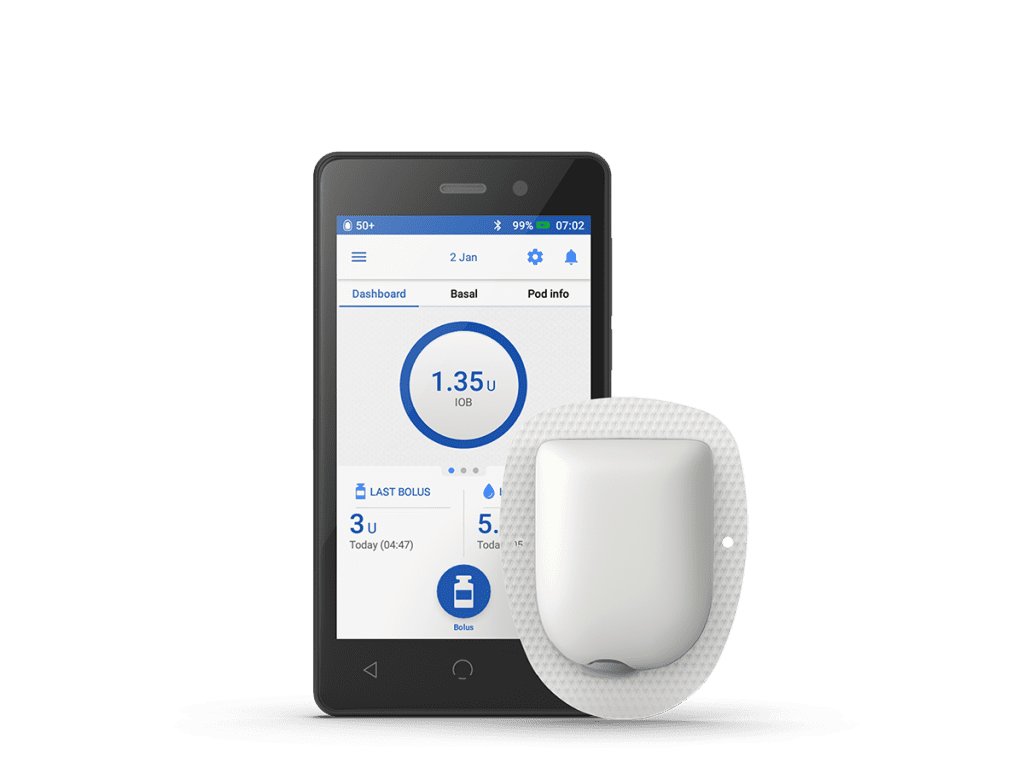
The EOFlow Pump for Illustration Pursposes:


Two aspects of the ruling deserve particular attention for anyone assembling a trade secret record:
- A single accrual date can cover an entire family of related secrets. The court held that because the DTSA treats continuing misappropriation as a single claim, discovery of the misappropriation of one trade secret starts the limitations clock running on other trade secrets disclosed by the same person, during the same period, for the same purpose — even for a trade secret that could not have been independently detected from the product itself. In Insulet, this meant a trade secret used only internally (an algorithm that never manifested in the competing product) was still time-barred once the clock had started on the more visible, product-level trade secrets disclosed in the same course of conduct.
- The court declined to resolve the “discovery” versus “inquiry-notice” debate — because it didn’t need to.Judge Prost’s dissent argued the majority effectively applied a more demanding inquiry-notice standard while claiming to apply the stricter discovery rule from the Supreme Court’s 2010 decision in Merck & Co. v. Reynolds. The majority sidestepped that fight by finding the claims untimely under either standard. That leaves the precise legal test still open for a future case, but the practical lesson is the same regardless of which standard eventually prevails: circumstantial evidence of access plus circumstantial evidence of similarity was enough, on these facts, to start the clock.
Because ITC trade secret findings are generally preclusive against the losing party in a later district court action, a complainant running a two-track strategy — an ITC complaint for the exclusion order, a district court case for damages — cannot treat the absence of an ITC limitations bar as license to sit on a claim. If a companion district court case is time-barred under Insulet‘s access-plus-similarity framework, a laches argument at the ITC targeting the same delay becomes considerably easier for a respondent to make, even without a codified deadline.
Practical diligence points this raises for a misappropriation complaint
- Document your own discovery timeline before a respondent’s counsel does it for you. Internal emails, slide decks, or conference notes that describe a competitor’s product as similar to your own are exactly the kind of evidence the Insulet majority relied on against the plaintiff. If those documents exist, get ahead of them rather than letting them surface for the first time in discovery.
- Treat related trade secrets disclosed by the same actor, in the same window, for the same purpose as a single limitations clock — not several. A litigation strategy that treats each trade secret in a family as independently timely is now harder to sustain in DTSA cases, and the same reasoning is likely to inform how an ITC respondent frames a laches argument.
- Build the injury and domestic industry record in parallel with the misappropriation timeline, not after it.As covered in Post 1, the ITC can resolve the injury question on an expedited basis — sometimes within 100 days of institution — and a complaint that arrives without both records assembled risks losing on a threshold issue before the delay question is ever reached.
- Don’t assume the ITC’s lack of a formal limitations statute is a safe harbor. Laches remains available to respondents, reform proposals aimed at closing this gap have real institutional support, and a parallel district court case decided against a complainant on limitations grounds will color how any ITC laches argument gets received.
Concealment: one word, four different doctrines
“Concealment” gets used loosely in trade secret disputes, but it actually does four distinct jobs in ITC practice, and mixing them up leads to strategy mistakes. Worth separating them out before deciding where a concealment argument belongs in a filing.
1. Concealment as a tolling doctrine, distinct from the discovery rule. The discovery rule — the standard Insuletwas decided under — asks when a reasonably diligent plaintiff should have found out about the misappropriation. Fraudulent concealment is a separate equitable doctrine: it tolls a limitations period specifically where the defendant took affirmative steps to hide the wrong, not merely where the plaintiff failed to notice something available to it. The two doctrines are often pled in the alternative in district court, but they are analytically distinct, and Insulet itself was resolved on access-plus-similarity discovery-rule grounds without needing to reach a concealment argument. Because the ITC has no codified limitations period for trade secret claims to begin with, a fraudulent-concealment argument at the Commission functions less as a tolling mechanism and more as a direct rebuttal to a respondent’s laches defense: evidence that the respondent actively hid the misappropriation cuts against any claim that the complainant unreasonably delayed in bringing it.
2. Concealment directed at the Commission itself. Commission Rule 210.4(c) requires anyone signing a filing to certify that its factual contentions have evidentiary support, and Rule 210.16(b)(2) gives respondents an affirmative defense based on a complainant’s breach of the duty of candor or abuse of process. This is the ITC’s closest analog to inequitable conduct in patent prosecution. If a complainant concealed material facts from the Commission — in the complaint, in the domestic industry showing, or in the Statement of Public Interest — that’s an independent basis for a respondent to attack the case, separate from the merits of infringement or misappropriation, and separate from any limitations or laches fight.
3. Concealment during discovery. ITC discovery moves on a compressed schedule under its own rules (19 C.F.R. §§ 210.27–210.34), supplemented by the presiding ALJ’s Ground Rules, and ALJs have sanctioned parties for discovery misconduct in the past — including precluding use of documents and recommending a public reprimand for a protective-order breach in Certain Plasma Display Panels and Products Containing Same, Inv. No. 337-TA-445, Order No. 15 (May 8, 2001). Incomplete or metadata-stripped document production, unkept commitments on third-party subpoena cooperation, or late productions can all generate a sanctions motion running in parallel with the merits — a fight that has nothing to do with the underlying limitations question but can consume as much attorney time.
4. Concealment as the underlying fraud theory. This is different in kind from the first three. Where a complainant’s core narrative is that a counterparty misrepresented a transaction — describing it as, say, a straightforward asset sale to obscure that proprietary technology was moving with it — that’s a fraud or misrepresentation theory going to scienter and willfulness, not a procedural defense. The ITC does not award money damages, so a freestanding fraud claim for damages still belongs in district court. But evidence of concealment can still matter at the Commission: it can strengthen an injury or domestic industry showing built around a “threat or effect” narrative, and where a complaint is running on a parallel track with a district court fraud or DTSA claim, the same evidentiary record supports both.
Where doctrines 1 and 4 intersect matters most for filing strategy. If concealment evidence is what defeats a limitations or laches problem in a parallel district court case, that evidentiary record needs to be built before the ITC complaint is filed, not assembled afterward in response to a laches defense. And because a duty-of-candor challenge under Rule 210.16(b)(2) cuts both ways, a complainant relying on a respondent’s concealment to explain its own delay needs its own disclosure timeline in equally good order — the same internal emails and conference notes that helped sink Insulet’s discovery-rule argument are exactly the kind of record a Rule 210.16(b)(2) challenge would go looking for on the complainant’s side of the ledger.
Where to find the Commission’s own complaint forms and filing guides
The Commission publishes its filing guidance and submission forms directly, and most of what a prospective complainant or its counsel needs is available without charge from the USITC’s own site:
- Filing Guidance for New Complaints — the Commission’s landing page for complaint filing instructions: usitc.gov/intellectual_property/filing_guidance.htm
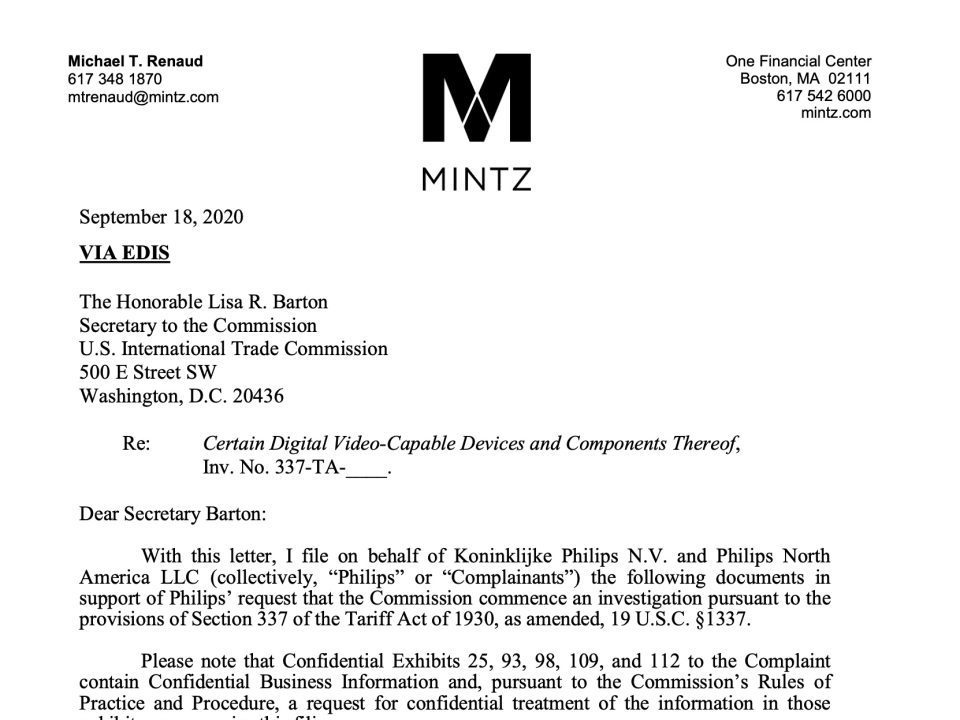
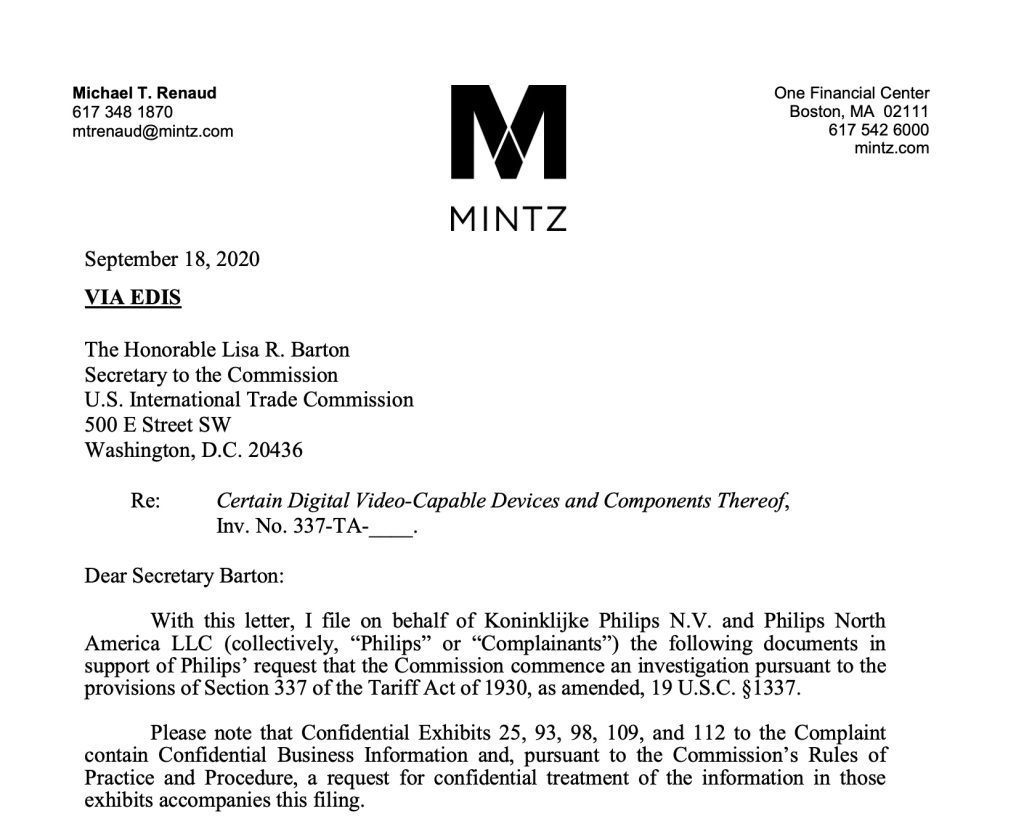
- Filing a Section 337 Complaint (Docket Services guidance, covered in detail in Post 2) — the cover letter, confidential treatment letter, and copy-count requirements: usitc.gov/docket_services/documents/337_complaint_guidance_version_II_2008-10.pdf
- EDIS Support page, with the Commission’s full library of electronic filing guides: usitc.gov/press_room/edissupport.htm — including:
- EDIS User Guide (69 pages) — the general reference for registering as an EDIS filer and submitting documents.
- Section 337 Electronic Complaint Submission Guidance (16 pages) — a step-by-step walkthrough of filing the public version of a new complaint through EDIS, including how to enter proposed complainant and respondent participants.
- Notice of Appearance Filing Guidance (19 pages) — for counsel appearing on behalf of a party after institution.
- EDIS Delegate Guide — for firms that authorize support staff to file on a registered attorney’s behalf.
- Handbook on Filing Procedures (17 pages) — the Commission’s consolidated reference on paper-copy requirements, deadlines, and what to do if EDIS itself is down at filing time.
- Section 337 Investigations: Frequently Asked Questions (Publication No. 4105, covered in Post 1 and Post 2) — usitc.gov/intellectual_property, searchable alongside the Commission’s other Section 337 Resources.
- 19 C.F.R. Parts 201 and 210 (the Commission’s Rules of Practice and Procedure) — available through eCFR.gov and linked from the Commission’s own Section 337 Rules page: usitc.gov/intellectual_property/section_337_rules.htm
None of these replace individualized advice from ITC counsel, but they are the primary-source documents every filing ultimately has to comply with, and they’re worth reading directly rather than relying solely on secondary summaries — including this series.
This post is for general informational purposes and does not constitute legal advice. The discussion of Insulet Corp. v. EOFlow, Co. concerns a district court DTSA action reviewed by the Federal Circuit, not an ITC Section 337 proceeding; the ITC’s own treatment of delay in trade secret cases currently proceeds under the equitable doctrine of laches rather than a codified limitations statute. References to Commission Rules 210.4(c) and 210.16(b)(2), and to sanctions precedent such as Certain Plasma Display Panels, are provided for illustrative purposes and should be confirmed against the current rules and Ground Rules in any active investigation. Readers evaluating a specific filing, a potential limitations issue, or a concealment-based defense or claim should consult qualified counsel and confirm current Commission precedent through EDIS at edis.usitc.gov.